Dominican Mottos & Emblems
Mottos of the Dominican Order
Welcome to our guide on the rich spiritual heritage of the Order of Preachers. For over eight hundred years, the mottos and symbols of Saint Dominic have anchored our global family of friars, nuns, apostolic sisters, and laity. Whether you are already a professed Lay Dominican or are currently discerning a call to join our fraternity, these timeless emblems serve as daily reminders of our shared vocation. They call us to root ourselves deeply in study and prayer so we can bring the light of Christ into our families, workplaces, and local communities.
Veritas
Truth
Veritas is the foundational motto of the Dominican Order, translating directly from Latin to mean "Truth." For Lay Dominicans, pursuing Truth is not an abstract academic exercise, but a lifelong encounter with Jesus Christ, who is the Way, the Truth, and the Life. We live out this motto by committing to ongoing study of Scripture and Church teaching, and by speaking the truth with charity and clarity in the secular world.


Laudare, Benedicere, Praedicare
To praise, to bless, to preach
Taken from the ancient liturgical blessings of the Order, Laudare, Benedicere, Praedicare means "To Praise, to Bless, to Preach." These three verbs outline the daily mission of every member of the Dominican family. We praise God through our devotion to the Liturgy of the Hours and the Eucharist, we bless the world by living lives of grace and mercy, and we preach the Good News through both our words and our daily example.
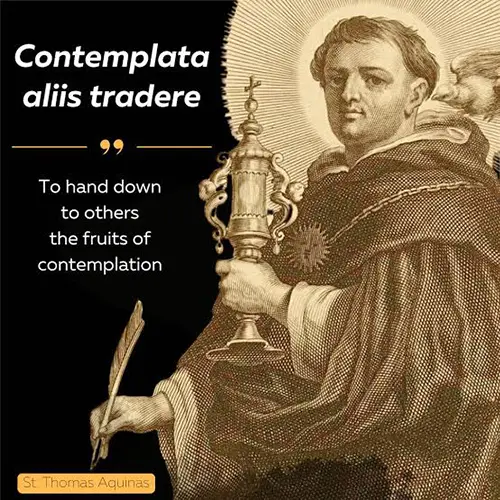
Contemplare et contemplata aliis tradere
To contemplate and to share with others the fruits of contemplation
Drawn from the writings of Saint Thomas Aquinas, Contemplata aliis tradere translates to "To contemplate and to hand on to others the fruits of contemplation." This motto captures the essential rhythm of Dominican life, balancing quiet prayer with active ministry. As Lay Dominicans, we first absorb the Gospel through daily prayer, liturgy, and study, and then naturally overflow with that grace to evangelize and serve those around us.
Emblems of the Dominican Order
As Lay Dominicans, also known as Third Order Dominicans, we live out our Christian vocation in the world while striving to grow in the four pillars of Dominican spirituality: prayer, study, community, and apostolate. These pillars serve as a guide for our daily lives, as we seek to deepen our relationship with God and share the fruits of our faith with others.
Dominican (Gyronni/Fleury) Cross
The Dominican Cross is a distinctive cross fleury, featuring flared, fleur-de-lis tips that symbolize purity and our devotion to the Blessed Virgin Mary. It is divided into eight alternating black and white triangles—known in heraldry as gyronny—representing the harmony of light and shadow, joy and penance, and truth conquering error. For Lay Dominicans, this cross serves as a bold visual reminder that the sacrifice of Christ stands at the very center of our apostolate.

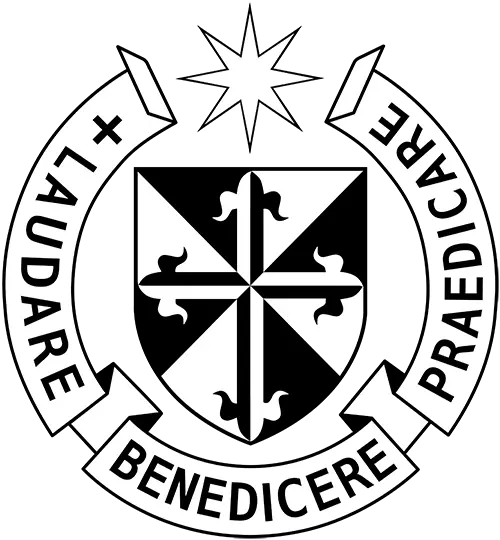
Dominican Shield
The Dominican Shield unites the Order's core visual identity into a single crest, traditionally displaying the black-and-white gyronny cross set upon a matching black-and-white shield. Depending on the artistic tradition, the shield is often surrounded by a chaplet of rosary beads, or by a flowing banner or parchment bearing the motto "Laudare, Benedicere, Praedicare." It is also frequently crowned with a star, representing the radiant star seen on Saint Dominic’s forehead at his baptism. Together, these elements signify our spiritual armor. Wearing or displaying this crest reminds Lay Dominicans that we are united as one spiritual family under the protection of Our Lady, guided by our founder, and sent forth to praise, bless, and preach.
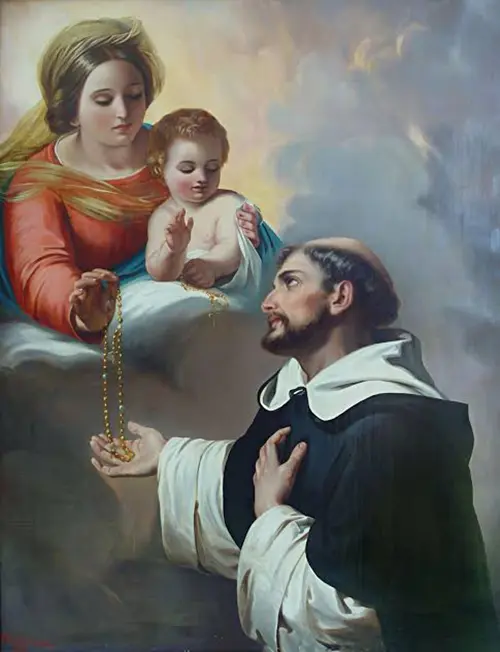
The Holy Rosary
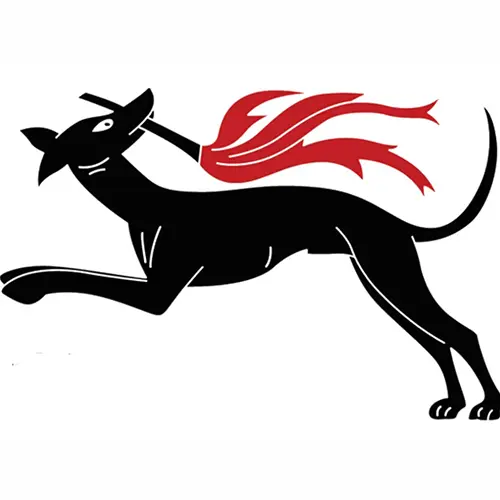
Dog with Flaming Torch
The dog carrying a flaming torch is a playful yet profound symbol tied to a vision experienced by Saint Dominic’s mother, Blessed Jane of Aza, before his birth. She dreamed of a small black-and-white dog leaping from her womb with a burning torch in its mouth, setting the whole world ablaze. This vision inspired a beloved Latin pun on our name—Dominicanus becoming Domini canes, or "Hounds of the Lord"—reminding Lay Dominicans of our duty to fiercely guard the faith and ignite the fire of God’s love wherever we go.
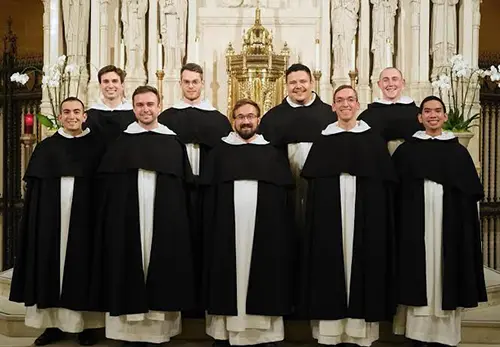
Black and White Habit
he Dominican Habit consists of a white tunic and scapular paired with a black cappa (cloak), symbolizing the dual nature of our spiritual life. The white represents purity, joy, and the resurrection of Christ, while the black signifies penance, humility, and dying to worldly desires. While Lay Dominicans live in the world and wear secular clothing, we receive a small white scapular upon admission and hold the right to be buried in the full Dominican habit, signifying our lifelong bond with the Order.